Your upper eyelid lift in Sindelfingen
Show contents
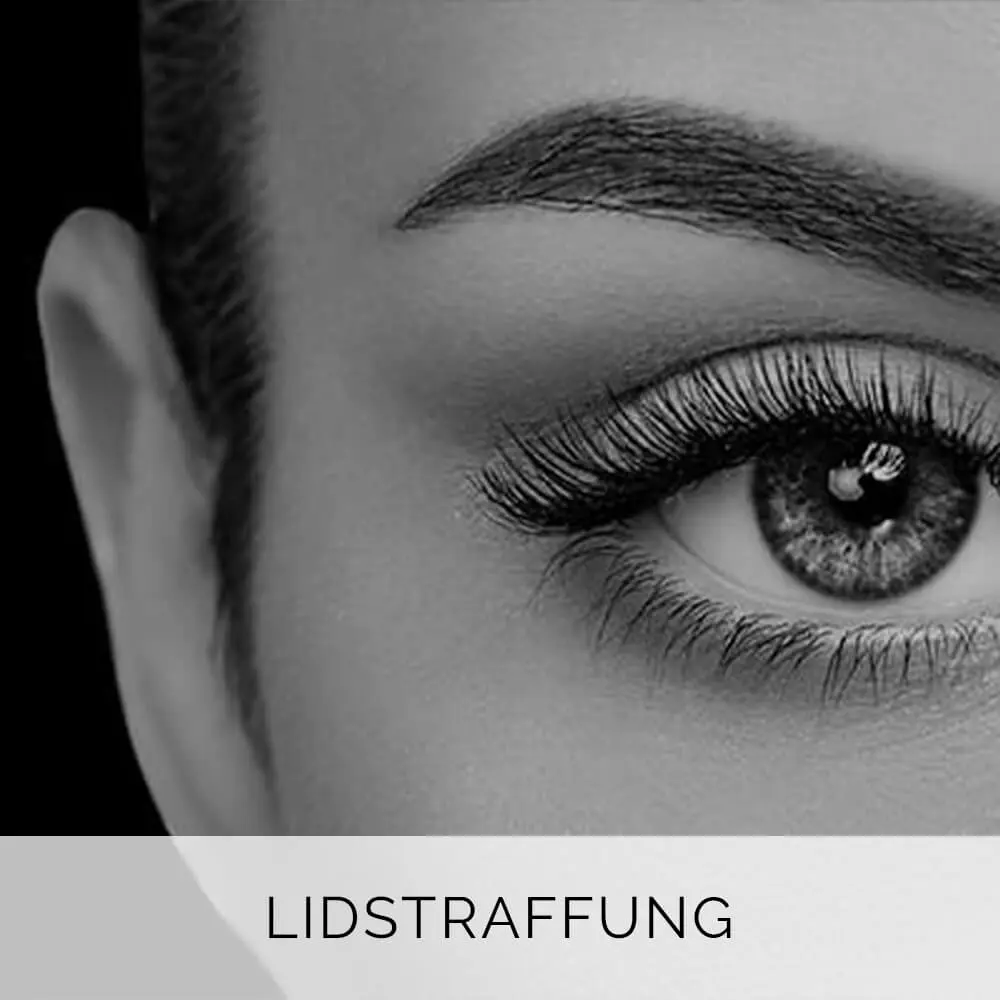
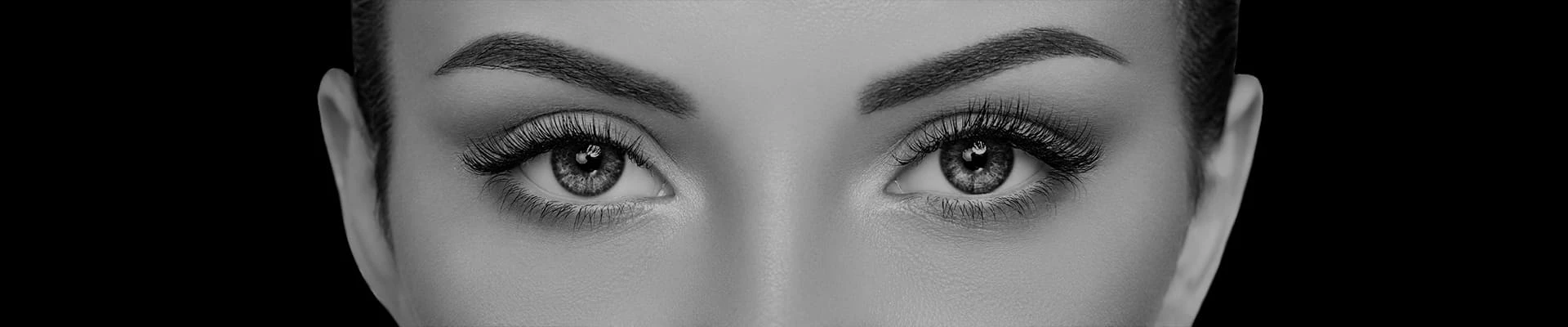
The eye region is not only an important instrument of human communication; it gives our face much of its expression and determines how we come across to others. Whether in private or professional life, a fresh facial expression and an open gaze are perceived as extremely positive. Over time, due to the very sensitive nature of the eyelid, bothersome excess skin with loss of elasticity can develop on the upper eyelids. Especially with low-set eyebrows, so-called hooded eyelids often develop, even in young people, in which the upper eyelids are barely or no longer visible or appear very swollen due to protruding inner fat pads of the eye socket. Those affected usually suffer from a tired or sad facial expression that they themselves or others notice, but which in no way reflects their actual mood. Many women are also often bothered by no longer being able to apply eye make-up as usual.
The level of distress and the needs of each individual are, like the eye region, very individual, which is why a precise analysis of the underlying problem and an individually tailored treatment concept are required.
In many cases, surgical tightening of the eyelids can make sense and truly open your eyes again. In experienced hands, eyelid surgery is certainly one of the most effective aesthetic plastic operations, which is why this small surgical procedure is one of the most frequently requested facial operations and is performed by me correspondingly often.
As always, it begins with a detailed consultation including analysis and examination of your eye region. All too often, the directly adjacent regions are overlooked in this context. The cause of a drooping upper eyelid or perceived slackening may also lie in a drooping eyebrow or a weakness of the eyelid-lifting muscle. In such cases, an upper eyelid lift (blepharoplasty) can be completely the wrong therapeutic approach and then leads to even greater problems. It must therefore first be determined whether you need an upper eyelid lift, a brow lift or possibly a correction of the eyelid-lifting muscles. In some cases, it may also make sense to combine these operations or to add a lower eyelid correction.
Key facts about the upper eyelid lift
| Duration of surgery: | approx. 60 minutes |
|---|---|
| Special features: | can be combined with a direct brow lift or lower eyelid lift |
| Type of anesthesia: | local anesthesia with/without twilight sedation, general anesthesia if necessary (to be considered for combined operations) |
| Hospital stay: | outpatient, 1 overnight stay if necessary (e.g. for combined operations) |
| Aftercare: | stitches removed after 1 week, adhesive strips for approx. 10 days, physical rest for 2 weeks, scar massage and sun protection, regular check-ups up to 1 year after surgery |
| Suture removal: | after one week |
| Back to social life: | 7–10 days depending on the course of healing |
| Back to work: | approx. 1 week for light office work, approx. 2 weeks for heavy work |
| Sports activities: | after approx. 2 weeks |
| Treatment costs: | from €2,900 depending on findings |
Patient reviews
Based on 715+ reviews
Frequently asked questions about upper eyelid lifts
What should you bear in mind before the operation?
If there are no significant pre-existing conditions such as high blood pressure, diabetes, heart disease or increased intraocular pressure (glaucoma), no special examination, for example by your family doctor, is required. In the case of high blood pressure that is not adequately controlled with medication, I may have to advise against the operation, as it would involve too high a risk of bleeding. Blood pressure medication, as well as medication for diabetes or thyroid disorders, may continue to be taken. Anticoagulant medications such as acetylsalicylic acid (ASA, aspirin) must be stopped at least 2 weeks before the operation. Medications such as heparin and Marcumar must also be paused or switched in good time in consultation with your family doctor, provided this is justifiable.
Immediately before the operation, you should not apply cream or make-up to the eye area, as this makes the necessary cleansing and disinfection very difficult; you do not, however, need to come to the operation on an empty stomach – it is better to come well fed.
How is an upper eyelid lift performed?
An isolated upper eyelid correction / upper eyelid lift can usually be performed safely under local anesthesia on an outpatient basis. Immediately before the operation, I will define the exact extent of the skin to be removed by marking it in consultation with you and calmly explain the procedure to you once again.
After the usually very low-pain local anesthetic has been given and after disinfection and sterile draping, the skin, individual muscle fibers and, if necessary, excess fat are carefully removed in the operating room, and the wounds are then sutured with very fine thread. The wounds are covered with very narrow, skin-colored adhesive strips. As the operation usually takes no longer than an hour, my patients are usually very fit. After the procedure, you may rest for a while in a slightly upright position and cool the eye area. This is followed by a detailed discharge consultation in which I give you important instructions and also hand you an information sheet.
How should I behave after the upper eyelid lift?
Even though the upper eyelid lift can be classified as a “minor” procedure, you should observe a few important points and take consistent care of yourself for a week. In your own interest, have your partner or a person you trust pick you up and go straight home after the operation. Because of the swelling that occurs, you must under no circumstances drive!
As the local anesthetic wears off after a few hours, slight pain or a mild burning sensation may occur. In this case, of course, treat yourself to a mild painkiller such as paracetamol so that you can get through the night relaxed and comfortably. I will of course give you precise dosage instructions personally. Don't worry, because my patients generally rate the pain intensity as very low.
Consistent cooling and resting of the eyes are important; we also recommend keeping your upper body slightly raised and your head upright for the first few days, as this best prevents swelling. Do not be alarmed if bruising of varying intensity, possibly asymmetrical, appears around the eye area in the first few days. This disappears within a few days. If you feel dryness in your eyes when you wake up in the morning, this is also a normal and, above all, quickly passing phenomenon caused by difficulty closing the eyelids until the swelling has subsided sufficiently.