
Tummy Tuck Stuttgart
Your step towards a flat and defined stomach
Show contents
The tummy tuck in Stuttgart, technically also known as abdominoplasty, is one of the most frequently requested body-lift operations. In my practice in Stuttgart, too, it is requested very often and performed correspondingly frequently. I can offer you proven expertise and a wealth of experience built up over many years in this field. Together with my team, I continuously develop and refine the surgical techniques on the abdominal wall, because I want to achieve particularly natural, harmonious and lasting results. This attitude is reflected in the high satisfaction rates of my female and male patients.
If you are bothered by sagging abdominal skin, stubborn stretch marks or an aesthetically and functionally disturbing abdominal apron that cannot be remedied by a healthy diet, weight loss or exercise alone, I am your contact for a treatment tailored individually to you.
The tummy tuck at a glance
Key facts about the treatment at a glance
| Treatment costs: | from approx. €4,500 (mini tummy tuck), from approx. €8,000 (classic)* |
|---|---|
| Duration of surgery: | approx. 1.5–3 hours (depending on the surgical technique) |
| Type of anesthesia: | General anesthesia (twilight sedation possible for a mini tummy tuck) |
| Hospital stay: | inpatient, outpatient possible for a mini tummy tuck |
| Surgical methods: | Mini, classic or T-incision abdominoplasty, optionally with liposuction |
| Special features: | Repair of diastasis recti & umbilical hernia in one session, optional high-definition liposuction |
| Back to social life: | after approx. 10–14 days |
| Back to work: | approx. 14 days for office work, longer for physically demanding jobs |
| Sports activities: | after approx. 4–6 weeks (depending on the surgical technique) |
| Aftercare: | Compression garment for 6 weeks, adhesive strips for approx. 2 weeks, scar care & UV protection for 12 months |
| Follow-up treatment: | regular check-ups up to 1 year after surgery |
| Preparation: | Individual consultation including choice of method and concept |
| Expert: | Dr. med. Christoph Zimmermann (learn more) |
| Appointment booking: | Conveniently online via our booking system |
* The costs of anesthesia and accommodation in the private clinic are invoiced separately and transparently.

4,98715 reviews
Your expert for tummy tucks
Dr. med. Christoph Zimmermann
Specialist in Plastic and Aesthetic Surgery · FEBOPRAS
Over 6,400 aesthetic procedures in 16+ years
Extensive experience in body-contouring procedures — built up at international positions in Germany, Switzerland and Mexico and as a senior physician at a practice specializing in body lifts.
FEBOPRAS certification
Fellow of the European Board of Plastic, Reconstructive and Aesthetic Surgery — the highest European specialist examination, which only a small proportion of German plastic surgeons take.
Expertise in body contouring & post-bariatric tightening
Experience in treating complex cases after bariatric surgery (gastric band, sleeve gastrectomy, bypass) and massive weight loss — with individually tailored concepts combining a tummy tuck and targeted body contouring.
Specialist in high-definition liposuction & diastasis recti repair
Precise high-definition liposuction to contour the abdominal midline as well as surgical repair of diastasis recti and umbilical hernias in a single operation — thanks to additional expertise in visceral surgery.
Memberships & certifications
Patient reviews on tummy tucks
Based on 715+ reviews

Verified review from Google
Ich habe bei Dr. Christoph Zimmermann eine Bauchdeckenstraffung inklusive Liposuktion der Flanken durchführen lassen und bin rundum zufrieden. Von der ausführlichen und ehrlichen Vorbesprechung über die reibungslose Operation bis hin zur sehr guten Nachsorge habe ich mich jederzeit bestens betreut gefühlt. Fachlich wie menschlich absolut überzeugend – klare Empfehlung!

Verified review from Jameda
Ich habe bei Herrn Dr. Zimmermann eine Bauchdeckenstraffung durchführen lassen, nachdem ich nach meinen Schwangerschaften unter einer ausgeprägten Rektusdiastase, schlaffer Bauchhaut und einem gedehnten Nabel gelitten habe. Vom Ergebnis bin ich absolut begeistert – mein Bauch sieht wieder ästhetisch aus. Durch die Bauchmuskelraffung konnte die Rektusdiastase vollkommen geschlossen werden und ich habe ein völlig neues Körpergefühl. Besonders hervorheben möchte ich die hervorragende Betreuung: von der ausführlichen und einfühlsamen Beratung über die Operation bis hin zu Zwischenfragen und Nachsorge. Dr. Zimmermann nimmt sich viel Zeit, erklärt alles verständlich und arbeitet stets mit dem Ziel, das bestmögliche Ergebnis zu erzielen. Ich kann Dr. Zimmermann absolut weiterempfehlen.
Verified review from Google
Ich hatte bei Dr. Zimmermann eine Bauchdeckenstraffung, mein Bauch ist mega schön geworden. Bei Dr. Zimmermann hat man sofort Vertrauen, ein mega tolles Gefühl, dass alles gut wird. Das komplette Team ist freundlich und hilfsbereit, man fühlt sich sehr wohl. Die Kommunikation gerade nach der Operation während des Genesungsprozesses war unkompliziert und hilfreich.
Verified review from Jameda
Rundum sehr zufrieden. Fühle mich mehr als gut aufgehoben bei Dr. Zimmermann und bin ihm sehr dankbar für diese OP, welche nicht einfach war. Fühle mich bestens aufgehoben und er hat mein vollstes Vertrauen. Hatte eine Kombination aus Bauchdeckenstraffung und Brustvergrößerung vor 2 Wochen.
Verified review from Google
Die Bauchdeckenstraffung bei Dr. Zimmermann hat mir ein komplett neues Lebensgefühl geschenkt! Vom ersten Gespräch an fühlte ich mich einfühlsam betreut und wusste, dass ich in guten Händen bin. Dr. Zimmermann ist zuverlässig, unterstützend und nimmt sich Zeit für jede Frage. Ich bin absolut zufrieden mit dem Ergebnis und würde mich jederzeit wieder für ihn entscheiden!
Reasons for and applications of a tummy tuck
A tummy tuck is aimed at women and men who are looking for a permanent solution to excess skin, sagging and loss of contour in the abdominal area. In my many years of experience, the most common reasons for an operation are:
- Sagging abdominal skin after pregnancy and breastfeeding: Depending on the course of the pregnancy, the size of the baby and the elasticity of the skin, irreversible skin damage in the form of stretch marks and a permanent loss of contour in the waist area are not uncommon.
- Weakness of the abdominal wall and diastasis recti: After pregnancy, the straight abdominal muscles can separate (diastasis recti), which leads to a bulging lower abdomen. There is also often a hernia of the navel (umbilical hernia), which, thanks to my additional expertise in abdominal and visceral surgery, can be treated in the same operation.
- Excess skin after massive weight loss: Common causes are extensive diets or bariatric surgery, such as a gastric band, sleeve gastrectomy or gastric bypass. After significant reduction of the stomach and rapid weight loss, the abdominal skin often does not retract adequately, resulting in pronounced excess skin that can lead to eczema in the lower abdominal fold, chafing in everyday life and psychological strain.
- Age-related loss of elasticity: As we age, the skin loses its firmness. A tummy tuck can help you feel comfortable in your body again.
- The desire for a harmonious body image: A flat stomach contributes significantly to a positive body image and quality of life.
I know from my practice that, for many patients, the burden of excess skin goes far beyond the purely aesthetic. It can promote skin rashes, considerably limit sporting activities and often leads to psychosocial strain, which can go as far as avoiding swimming pools and saunas or problems in relationships. This is exactly where a tummy tuck can do more than just optimize contours. It makes possible a new body confidence that many of my patients describe as a profound turning point.
Our quality standards
Individual advice, trust, long-term support
A tummy tuck is a demanding procedure that requires far more than just mastering the surgical technique. You as a person and individual are the focus for me, from the first consultation to the last follow-up examination. I place particular emphasis on an honest consultation on an equal footing, in which I put your wishes into realistic perspective and show you what can be achieved surgically without raising false expectations.
Compared to large clinics, I offer you personal care by a single specialist who operates on you himself and accompanies you for over a year after your operation. This means short distances, clear responsibilities and one contact person who knows your progress from the very beginning. I continuously develop the surgical techniques on the abdominal wall further, because I am convinced that natural and stable long-term results can only be achieved through constant refinement of the methods.


The consultation
About an hour for your individual situation
In my view, a good consultation is the foundation of every successful tummy tuck. In a personal conversation, I first get a comprehensive picture of your motives, your expectations and your medical history. This is followed by a careful physical examination, in which I palpate your abdominal wall and check specifically whether there is diastasis recti, an umbilical hernia or other structural changes that should be treated as part of the operation.
On the basis of this examination, I work out the right surgical concept together with you. We clarify whether a mini tummy tuck, a full abdominoplasty or, for very large amounts of excess skin, the fleur-de-lis variant makes sense for you. We also discuss at this point whether simultaneous liposuction to contour the waist or define the abdominal midline is an option. You will receive an honest cost estimate, clear information about the course of the operation and aftercare, and plenty of room for all your questions. Should I advise against an operation from a medical point of view, I will tell you so openly and, where possible, show you alternative options.
Tummy tuck methods
The three most important incision patterns at a glance
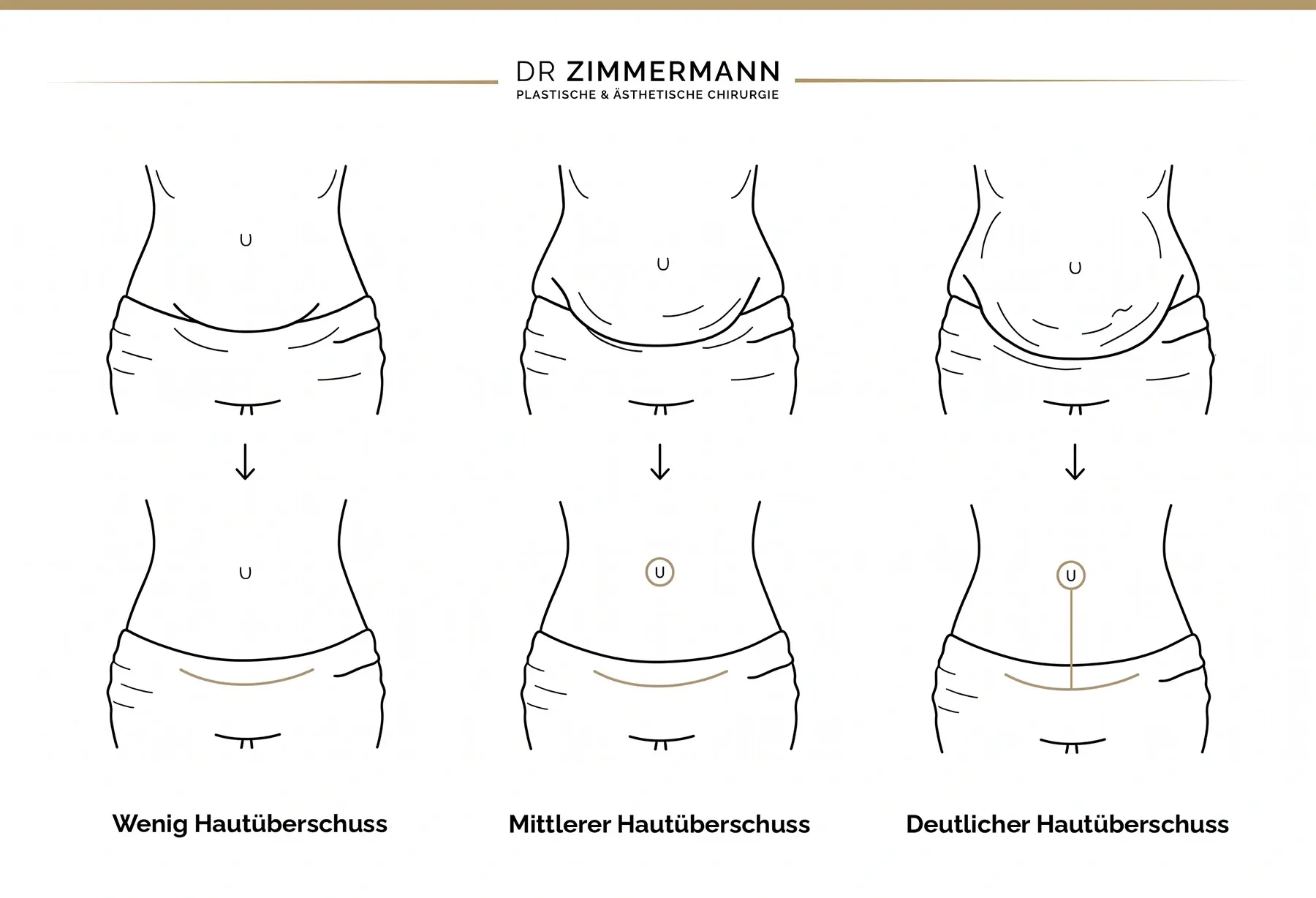
The incision pattern is one of the key decisions before every tummy tuck, as it largely determines where your scar will later run and how much tissue can be removed. In my practice, three different incision patterns are used, which I choose individually depending on the excess skin, the initial findings and the desired result. With all three variants, I place the incision so low on the lower abdomen that the later scar remains hidden under bikini bottoms, underwear or swimming trunks.
Classic curved incision along the bikini line
In the classic incision pattern, a slightly curved incision is made just above the pubic hairline, which blends harmoniously into the natural body line. This variant is the proven starting point for most tummy tucks, because it allows careful correction of skin and connective tissue while leaving the least conspicuous scar. It is used for both the mini tummy tuck and the full tummy tuck.
Anchor incision
If larger amounts of tissue need to be removed, especially if the excess skin extends well above the navel, the anchor incision is used. Here, a short vertical scar towards the navel complements the horizontal incision along the bikini line. Even though this additional scar means a little more visibility, it gives us considerably more scope for harmonious contouring and a coherent overall result. The anchor incision is often the right choice when, after a pregnancy or moderate weight loss, there is excess skin that could not be fully addressed with the classic curved incision.
W-incision
In cases of pronounced sagging of the abdominal wall, I offer you the W-incision. As the name suggests, the incision runs in a W-shaped line just above the groin creases and the pubic bone. This incision pattern creates the conditions for particularly extensive and even tightening and is used wherever a simple curved incision reaches its limits. In practice, the W-incision is an important option for patients with particularly overstretched or sagging skin.
Extent of a tummy tuck
Mini, full or fleur-de-lis: how much needs to be tightened
While the incision pattern describes how the skin incision is made, the extent concerns how much of the abdominal wall is actually tightened. Which variant is right for you depends on the excess skin, the condition of the abdominal muscles and the navel. We make the decision together in the consultation after a careful examination.
Mini tummy tuck (mini abdominoplasty)
The mini tummy tuck is used when there is only a small amount of excess skin on the lower abdomen that reaches no higher than the navel, and the muscles of the abdominal wall are still sufficiently intact. In contrast to the full tummy tuck, the skin is only lifted to just above the navel and then tightened downwards. The navel itself remains in its original position, but gains a beautiful, slightly vertically oval shape thanks to the vertical tightening effect. The later scar is only about half as long as after a full tummy tuck and resembles a cesarean section scar. This variant is particularly suitable for slim women and men with loose skin limited to the lower abdomen.
Full tummy tuck (abdominoplasty)
The full tummy tuck is the method of choice when the excess skin or abdominal apron extends above the level of the navel or there is significant weakness of the abdominal wall. In this variant, the skin is lifted from the pubic bone to the costal arch, the navel is freed from the surrounding skin with a circular incision and, after tightening, moved to its new, anatomically appropriate position in the “new abdomen”. If necessary, I also tighten the inner abdominal wall with a so-called rectus plication, i.e. by suturing the separated abdominal muscles together. An accompanying umbilical hernia can also be closed at this point. The result is a flat, defined stomach with a scar that runs discreetly along the bikini line.
Fleur-de-lis tummy tuck (T-incision abdominoplasty)
The fleur-de-lis variant, also known as T-incision abdominoplasty, is the most extensive form of tummy tuck and is used mainly after massive weight loss or bariatric surgery. Here, the normal incision along the bikini line is not sufficient to remove the excess skin completely. An additional vertical incision is therefore made from the pubic bone towards the breastbone, resulting in a T-shaped scar overall. The advantage of this method is the possibility of clearly emphasizing the waist and harmoniously removing even very pronounced excess skin. The resulting scarring is more visible than with the other methods, but in return patients gain a considerably better contour result that could not be achieved with a bikini-line method alone.
Tummy tuck combined with liposuction
When excess skin and fat pads come together
In many cases, a tummy tuck alone is not enough to achieve the desired contour. If, in addition to loose skin, there are also localized fat pads, for example on the flanks, waist or upper abdomen, I combine the tummy tuck with targeted liposuction. The choice of the exact technique depends on whether the main aim is to optimize the contour or to achieve a finely sculpted definition of the abdominal region.
Lipoabdominoplasty: tummy tuck with classic liposuction
In lipoabdominoplasty, I combine the classic tummy tuck with gentle liposuction. The fatty tissue directly beneath the abdominal skin is suctioned off, while the deeper fat layer remains untouched. This selective approach protects the blood vessels of the abdominal wall and ensures a good blood supply to the tissue after the tightening. Lipoabdominoplasty is the method of choice when, in addition to the excess skin, distinct fat pads on the flanks, upper abdomen or waist are bothersome. The result is a more harmonious overall contour, a more pronounced waistline and an overall slimmer appearance.
High-definition liposuction for abdominal contouring
For particularly athletic patients, or if a finely defined abdominal contour is desired, I offer high-definition liposuction. Here, the fatty tissue is suctioned off very superficially and sculpted in a targeted way so that the natural muscle relief of the abdominal wall becomes visible. In women, the abdominal midline, the so-called linea alba, can be brought out as a fine “champagne groove” in this way. In men, a subtle six-pack relief can be shaped. High-definition liposuction is a technically demanding form of body contouring and requires a high degree of surgical experience and a good aesthetic eye.
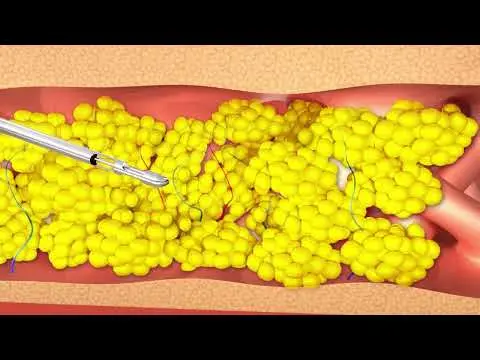
You are currently viewing placeholder content from YouTube. To access the actual content, click the button below. Please note that data will be passed on to third parties. More information
Preparing for a tummy tuck
How to prepare optimally for the procedure
Careful preparation is the basis for a good surgical result and an uncomplicated healing process. The following points are particularly important before a tummy tuck:
- Stable body weight and BMI below 30: If possible, you should have reached a normal body weight and maintained it for a few months. A body mass index below 30 should be the goal, in order to reduce surgical risks and ensure a stable long-term result.
- Completed family planning: A pregnancy can change the result of a tummy tuck later on. I therefore recommend having the operation only after family planning is complete. After a pregnancy, at least six to twelve months of postnatal recovery should also have passed.
- Ruling out hernias by ultrasound: Existing hernias of the abdominal wall, such as umbilical or inguinal hernias, should be confirmed by ultrasound before the operation. You can easily arrange this examination with your family doctor or a radiologist.
- No nicotine from at least four weeks before to four weeks after the operation: Nicotine has a considerable negative effect on wound healing. Avoiding it reduces the risk of wound healing disorders and protects the result of the operation.
- Current blood values two to three weeks before the operation: You can usually request these from your family doctor without any problems. You will receive all the necessary documents from my practice in good time.
- Well-controlled pre-existing conditions: High blood pressure or elevated blood sugar levels, for example in diabetes mellitus, must be demonstrably well controlled before the operation. Acute inflammation or infections of the abdominal skin must have healed completely by the date of surgery.
I also recommend that you make sure you get enough rest in the days before the operation, take care of important errands beforehand and organize support from family or friends for the first few days after the procedure.
The operation
This is how your day of surgery in the private clinic goes
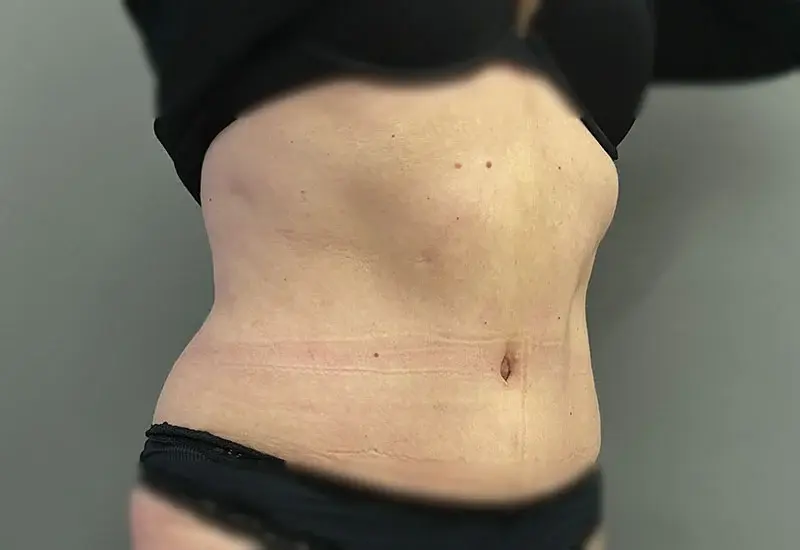
On the day of surgery, depending on the planned type of anesthesia, you arrive on an empty stomach at the agreed time at the private clinic where I operate on you. There you are welcomed and prepared by the specialist staff. I go through the course of the operation with you once more at leisure, answer any last questions and draw the individual incision lines on your abdominal wall. After photo documentation, you are taken to the operating room and positioned.
Depending on the planned concept, the anesthesiologist now puts you under general anesthesia or local anesthesia is induced in combination with twilight sedation. In the operation that follows, I remove the excess skin and, if necessary, fatty tissue step by step. Depending on the findings, I perform additional surgical steps, such as internal tightening of the abdominal wall by rectus plication, closure of an umbilical hernia or reshaping of the navel. The simultaneous repair of an umbilical hernia in particular is possible in the same operation thanks to my additional expertise in general abdominal and visceral surgery, which many of my patients appreciate as a great advantage.
At the end of the operation, I suture all wounds particularly finely in several layers, insert drains if necessary and cover the abdominal wall with a sterile dressing. As a rule, you will already receive a compression belt or the compression garment in the operating room, which will accompany you over the coming weeks. After waking up, you first go to the recovery room, where you are closely monitored, and then, as agreed, to the ward, or you can be discharged home with an escort once you have recovered sufficiently.
After the tummy tuck
Healing, aftercare and returning to everyday life
The phase after the operation is at least as important for a good final result as the procedure itself, which is why I accompany you closely for at least one year. In the first few days, rest, calm movements and a slightly bent-forward posture are necessary to relieve the freshly operated abdominal wall. A certain feeling of tightness is normal in this phase and subsides step by step as you become more mobile. A balanced mix of gentle, short walks and rest periods with the hips and knees relaxed and bent has proven very effective.
For at least six weeks, you consistently wear the compression garment, which counteracts swelling and supports the stabilization of the abdominal wall. Adhesive strips covering the wound remain on the abdomen for about two weeks; the stitches at the navel are removed after around ten days. Once the wounds have healed without irritation, the phase of consistent scar care and scar massage begins, which you should continue for about nine to twelve months. I also recommend consistent UV protection of the scar for at least twelve months, because fresh scars can become permanently darker when exposed to sunlight. Lymphatic drainage and tissue massage can be a useful addition depending on the course of healing.
With office work, you can usually return to work after about two weeks; for physically demanding work, a longer break is recommended. Most of my patients are able to go out in public again after ten to fourteen days. You should avoid sports for four to six weeks, after which you start with moderate activities such as walking or light cycling and only increase the strain after consulting me. Ideally, you should only resume sauna, full baths and intensive abdominal exercises after about two months. A representative result of your tummy tuck is usually visible after six weeks, but the final result only shows after six to twelve months due to residual swelling and scar maturation. Especially if liposuction was performed at the same time, the final contouring takes a little longer.
Risks of a tummy tuck
Like any surgical procedure, a tummy tuck involves certain risks, side effects and possible complications, which I will explain to you openly and fully before the operation.
- Swelling and hematomas: Visible swelling and minor bruising are normal in the first few weeks and usually subside within a few weeks.
- Seroma formation: Wound fluid can accumulate under the skin, which in rare cases has to be drained with a needle. Drains and consistent compression help prevent this.
- Wound healing disorders: Because the skin is lifted, the blood supply to the wound edges is temporarily reduced, which can occasionally lead to delayed wound healing. Consistently avoiding nicotine reduces this risk considerably.
- Sensory disturbances: Temporary or, rarely, permanent numbness above the scar is possible, which in most cases subsides within months.
- Conspicuous scarring: Hypertrophic scars or keloids occasionally occur, especially in people with a corresponding predisposition. Consistent scar care over several months helps prevent this.
- Thromboembolic complications: As with any major operation, there is an increased risk of thrombosis, which I specifically counteract with preventive medication, compression stockings and early mobilization.
- Asymmetries and contour irregularities: Minor asymmetries are possible and can be corrected with small corrective procedures if necessary.
- Tearing of the muscle suture due to early strain: If rectus plication was performed during the operation, physical strain too early can cause the muscle suture to tear. Therefore, follow my recommendations on the recovery period consistently.
- Infections: As with any procedure, infections are possible in principle, but very rare thanks to the highest hygiene standards in the private clinics I use.
- Anesthesia risks: General anesthesia risks are discussed in detail in a separate consultation with the anesthesiologist.
Costs of a tummy tuck in Stuttgart
The costs of a tummy tuck in my practice depend on the extent of the operation and the surgical method chosen. The following guide values apply for orientation:
- Mini tummy tuck: from around €4,500
- Full tummy tuck with navel repositioning and, if necessary, rectus plication: from around €8,000
- Fleur-de-lis tummy tuck (T-incision abdominoplasty): correspondingly higher, as is the case with simultaneous liposuction or high-definition liposuction
Directions to my practice in Stuttgart
Everything you need to know for your visit
Dr. med. Christoph Zimmermann
Private practice for plastic and aesthetic surgery
Regerstraße 1, 70195 Stuttgart, Germany
Phone: +49 711 46966991 (no appointments by phone)
E-mail: kontakt@plastischechirurgie-zimmermann.de
My barrier-free practice is located on the 2nd floor of the Orthopädische Klinik Stuttgart-Botnang. For your first consultation, please register at the central reception on the ground floor on weekdays; the main entrance is just around the corner. You can also come directly to the 2nd floor and take a seat in the seating area towards the terrace, where we will pick you up.
On weekdays, you can park free of charge in our in-house underground car park; there are also plenty of free parking spaces in the surrounding streets.
You are currently viewing placeholder content from Google Maps. To access the actual content, click the button below. Please note that data will be passed on to third parties. More information
Other body lifts
Frequently asked questions about tummy tucks
Who is suitable for a tummy tuck?
A tummy tuck is particularly suitable for people who mainly have excess skin in the abdominal area and for whom fat volume is not the main problem. The best result can be achieved when there is as much excess skin and as little fatty tissue as possible.
Severe excess weight should first be reduced to a medically justifiable level, ideally to a body mass index below 30, so as not to unnecessarily increase the surgical risks. Overweight patients are therefore advised to first focus on changing their diet and getting enough exercise. If there are also localized fat pads, simultaneous liposuction can be a useful addition or, in some cases, even an alternative.
What BMI should I have for a tummy tuck?
For a tummy tuck, a body mass index below 30 should be reached if possible. This guideline is important because a significantly higher weight increases the risk of wound healing disorders and other complications and at the same time jeopardizes the long-term result.
However, a weight that has been stable for several months is just as decisive as the BMI value itself. Anyone who is still in the middle of losing weight should complete this first, as later fluctuations in weight can change the result of the operation again. In the consultation, your individual starting situation is assessed and we discuss openly whether the right time for the procedure has come.
What is the difference between a classic tummy tuck and a mini tummy tuck?
A classic tummy tuck is used for significant excess skin or an abdominal apron that extends above the level of the navel. This procedure also tightens the upper abdomen and includes repositioning the navel with subsequent reshaping.
A mini tummy tuck, on the other hand, concentrates on the lower abdomen up to the navel and does not require repositioning of the navel. It is particularly suitable for slim women and men who ideally have only loose skin in the lower abdomen and whose navel is not affected in its shape.
What is diastasis recti and is it treated at the same time?
Diastasis recti is a separation of the straight abdominal muscles that occurs mainly after pregnancy and leads to a bulging lower abdomen and a weakened abdominal wall. Diastasis recti is usually treated as part of the tummy tuck.
The separated muscles are sutured back together, which is technically referred to as rectus plication, so that the internal stability of the abdominal wall is restored. The examination often also reveals a hernia of the navel, a so-called umbilical hernia. Thanks to existing expertise in general abdominal and visceral surgery, such a hernia can also be closed in the same operation, without the need for a second procedure.
What happens to the navel during a tummy tuck?
That depends on the extent of the operation. In a full tummy tuck, the navel is freed from the surrounding skin with a circular incision and, after the tightening, inserted at its new, anatomically appropriate position, creating a natural-looking navel in a flat, tightened abdomen.
In a mini tummy tuck, on the other hand, the navel remains in its original position, but often gains a beautiful, slightly vertically oval shape thanks to the vertical tightening effect. A small ring-shaped scar remains around the newly inserted navel, which fades over time and is usually hardly noticeable.
Can a tummy tuck be combined with liposuction?
Yes, combining a tummy tuck with liposuction makes sense in many cases and is referred to as lipoabdominoplasty. If, in addition to excess skin, there are localized fat pads on the flanks, waist or upper abdomen, the fatty tissue is gently suctioned off and the abdominal wall is then tightened.
If the conditions are right, high-definition liposuction is also possible, which can bring out the natural muscle relief and, in women, the abdominal midline as a fine line. Whether a combination is an option is assessed on the basis of the findings in the personal consultation.
How is a tummy tuck performed?
On the day of surgery, depending on the planned type of anesthesia, you are admitted to the private clinic on an empty stomach, where you are prepared by the specialist staff. After another discussion about the procedure, the incision lines are marked and photo documentation is made.
Then, depending on the concept, general anesthesia or local anesthesia with twilight sedation is induced. During the operation, the excess skin and, if necessary, fatty tissue is removed step by step, supplemented by additional steps such as internal tightening of the abdominal wall, repair of an umbilical hernia or reshaping of the navel.
Finally, all wounds are finely sutured in several layers, drains are inserted if necessary, and a sterile dressing and a compression garment are applied, which is worn for about six weeks. After the operation, you first go to the recovery room and then, as agreed, to the ward.
Is a tummy tuck performed as an outpatient or inpatient procedure?
As a rule, a tummy tuck is performed as an inpatient procedure, so that you are monitored and cared for in the private clinic after the procedure. With a mini tummy tuck involving less surgery, an outpatient procedure is also possible depending on the findings and the course of healing.
Which option is sensible and safe in an individual case is decided together in the consultation. Safety and close monitoring in the first hours after the operation always take priority.
How can I prepare for a tummy tuck?
Before the operation, it is important to reach and maintain a body weight that is as normal as possible, ideally with a body mass index below 30. A tummy tuck should also only be performed once family planning is complete and, after a pregnancy, at the earliest after a recovery phase of six to twelve months, as the abdominal wall can still recover significantly during this time with consistent postnatal exercises.
Instabilities of the abdominal wall such as hernias should be clarified in advance by ultrasound at your family doctor or a radiologist. Nicotine must be avoided for at least four weeks before until four weeks after the operation, as it significantly impairs wound healing. In addition, current blood values are required to confirm fitness for surgery about two to three weeks before the procedure, which can easily be requested from your family doctor. Elevated blood pressure or blood sugar levels should be well controlled in good time.
How long and how visible is the scar after a tummy tuck?
In a classic tummy tuck, the scar runs horizontally just above the pubic hairline from one hip bone to the other, so that it later remains hidden under underwear, bikini bottoms or swimming trunks. If the navel is repositioned, there is also a small ring-shaped scar around the navel.
In a mini tummy tuck, the scar is much shorter and resembles a cesarean section scar. Fresh scars are initially red and fade to a fine line over the months, provided they are consistently cared for and protected from sunlight for about twelve months. If you are prone to conspicuous scarring, additional scar treatment may be advisable.
What pain can be expected after a tummy tuck?
The abdomen itself is surprisingly insensitive to pain after the operation; the main sensation is usually a distinct feeling of tightness in the abdominal wall. In the first few days, a slightly bent-forward posture is necessary, which can temporarily lead to back pain.
This can usually be controlled well with painkillers and subsides quickly as you straighten up more and more. Overall, most patients find the healing process very bearable, especially as pain therapy is adjusted individually.
How long does healing take and when can I return to work?
After a tummy tuck, a real recovery phase is important, for which at least two weeks should be planned. For office work, you can usually return to work after about two weeks; for physically demanding work, a longer break is recommended.
The first few days are characterized by rest, slow controlled movements and a feeling of tightness in the abdominal wall. A healthy balance of gentle, short walks and rest periods in a relaxed position with the hips and knees bent promotes healing and the reduction of swelling.
The compression garment is worn for about six weeks, after which increasing strain is possible after a check-up. A representative result is usually visible after six weeks, the final result only after six to twelve months due to scar maturation.
When can I do sports again after a tummy tuck?
Sports activities should be avoided for about four to six weeks after a tummy tuck, depending on the surgical technique chosen and the course of healing. Gentle movement in the form of short walks, on the other hand, is encouraged from the start, as it promotes blood circulation and prevents thrombosis.
After the recovery period, you start with moderate exercise, which is only increased after consultation. If the abdominal wall was tightened during the operation by rectus plication, this recovery period is particularly important, as straining too early can jeopardize the muscle suture. Intensive abdominal exercises, sauna and full baths should ideally only be resumed after around two months.
What are the risks of a tummy tuck?
Like any surgical procedure, a tummy tuck involves certain risks, which are explained openly and fully before the operation. These include temporary swelling and bruising, the accumulation of wound fluid, wound healing disorders and a usually temporary numbness above the scar.
Conspicuous scarring, asymmetries or infections occur less frequently. As with any major operation, there is also a risk of thrombosis, which is specifically counteracted with preventive medication, compression and early mobilization. If the abdominal wall was tightened, straining too early can jeopardize the muscle suture.
Careful assessment of the indication, the highest hygiene standards and close aftercare keep these risks as low as possible. International studies confirm the high level of safety and satisfaction after this procedure; in an analysis of around 200 patients, 86 percent were satisfied with the result and 95 percent reported a significant improvement in their complaints.
How long does the result of a tummy tuck last?
The result of a tummy tuck is basically permanent, as the excess skin that has been removed does not return. However, a prerequisite for a stable long-term result is a constant body weight.
Major weight fluctuations or a new pregnancy can change the result later on, because the abdominal wall stretches again. A balanced diet and sufficient exercise after the operation are therefore recommended, as is completing family planning before the procedure if possible. Under these conditions, the result will last for many years.
Can I still get pregnant after a tummy tuck?
Yes, pregnancy after a tummy tuck is possible without any problems and does not pose a health risk, as the abdominal wall and skin remain stretchable.
However, it should be borne in mind that a pregnancy can change the result of the operation again, as the previously tightened abdominal wall stretches again. For this reason, it is advisable to have a tummy tuck only after family planning is complete. If you wish to have children, the right time should be discussed openly in the consultation.
Will health insurance cover the costs of a tummy tuck?
As a rule, statutory health insurance does not cover the costs of a tummy tuck, as it is usually an aesthetic procedure that is classified as not medically necessary.
In justified individual cases, however, coverage may be possible, for example if pronounced excess skin demonstrably leads to recurring inflammation, eczema or other health complaints. Such coverage requires an individual review and corresponding evidence and is decided by the insurer in advance. Regardless of this, it is advisable to take out follow-up cost insurance before the procedure, which provides cover in the unlikely event of a complication.
How much does a tummy tuck cost?
The costs of a tummy tuck depend on the surgical method chosen and the individual effort involved. A mini tummy tuck starts at around €4,500, a classic tummy tuck with repositioning of the navel and, if necessary, tightening of the inner abdominal wall at around €8,000. For a T-incision abdominoplasty or additional liposuction, the costs are correspondingly higher.
The fee includes surgical planning, use of the operating room including specialist staff, all dressing changes, the compression garment and complete pre- and post-operative care for one year. The costs of anesthesia and any overnight stay in the private clinic are invoiced separately and transparently. A complete written cost plan is prepared in advance, so there are no hidden items.
Do you have any questions that are not listed here, or would you like more information about tummy tucks in Stuttgart? I am happy to take the time for a detailed and trusting consultation. Call +49 711 46 96 69 91 or book an appointment directly online: Go to appointment booking.