

Polynucleotides in Stuttgart
Natural skin rejuvenation with salmon DNA
Show contents
Treatment with polynucleotides is one of the most innovative procedures in modern aesthetic medicine and has quickly become one of the most sought-after methods of gentle skin rejuvenation. As a bioactive ingredient, often derived from highly purified salmon DNA, the polynucleotide does not act as a classic filler that adds volume but as a so-called biostimulator that stimulates the skin's own regeneration processes from within. In my practice in Stuttgart, I use polynucleotide treatment specifically where a natural improvement in skin quality is desired, i.e. for tired, sallow or dehydrated skin, for fine lines and for an incipient loss of firmness and elasticity.
Unlike purely superficial treatments, polynucleotides are about genuine regeneration of the skin at cellular level, which is why the procedure is also referred to as regenerative aesthetics. On this page, you will learn what polynucleotides are exactly, why salmon DNA in particular is so well tolerated, how the treatment works and is carried out, who it is suitable for and what costs you can expect in Stuttgart. As a specialist in plastic and aesthetic surgery, a particularly gentle approach and a natural result that preserves your charisma are important to me.
Polynucleotide treatment at a glance
Key facts about the treatment at a glance
| Treatment costs: | from approx. €450 per session (2 ml)* |
|---|---|
| Treatment duration: | approx. 30 minutes |
| Anesthesia: | anesthetic cream if required, usually not necessary |
| Active ingredient: | highly purified polynucleotides (salmon or trout DNA) |
| Areas of application: | face, eye area, neck, décolleté, backs of the hands |
| Recommended sessions: | usually 2–3 sessions 2–4 weeks apart |
| Mode of action: | stimulates cell regeneration, skin tightening and deep hydration |
| Back to social life: | immediately (slight redness or wheals possible) |
| Downtime: | none, immediate return to everyday life possible |
| First results: | after a few weeks, building up over the sessions |
| Durability: | several months, top-up recommended |
| Preparation: | individual consultation and analysis of the complexion |
| Expert: | Dr. med. Christoph Zimmermann (learn more) |
| Appointment booking: | Conveniently online via our booking system |

4,98715 reviews
Your expert for polynucleotides in Stuttgart
Dr. med. Christoph Zimmermann
Specialist in Plastic and Aesthetic Surgery · FEBOPRAS
Over 6,400 aesthetic procedures in 16+ years
Many years of experience in aesthetic medicine, built up through international positions in Germany, Switzerland and Mexico, which goes into every single treatment, including the regeneration of the skin with polynucleotides.
Sound knowledge of facial anatomy
As a specialist in plastic and aesthetic surgery, I know the structure of the skin and the underlying structures in detail, which is crucial for precise and safe placement of the polynucleotides.
Innovative, scientifically based procedures
My aim is to offer you modern and scientifically based treatments. I use polynucleotide therapy specifically where it can demonstrably improve skin quality in a natural way.
Natural result and honest advice
My goal is visibly fresher and healthier skin that looks natural. In an honest consultation, I check whether polynucleotide treatment is the right choice for your complexion.
Memberships & certifications
Patient reviews of polynucleotide treatment
Based on 715+ reviews

Verified review from Jameda
Ein sehr kompetenter und freundlicher Arzt. Beim Erstgespräch wurde ich ausführlich beraten und aufgeklärt, sodass ich mich für die Behandlung bei ihm entschied. Schon nach der ersten Sitzung zeigte sich ein Erfolg und ich war begeistert. Die zweite Sitzung erfolgte daraufhin.

Verified review from Google
Dr. Zimmermann ist ein wirklich hervorragender Arzt, absolute Spitzenklasse in seinem Fach, äußerst professionell und dabei immer freundlich und zugänglich. Von Anfang an fühlt man sich ernst genommen und bestens aufgehoben. Ich hatte durchgehend das Gefühl, in den besten Händen zu sein. Alles in allem eine fantastische Erfahrung, ich würde ihn ohne zu zögern weiterempfehlen. Meine Behandlung ist acht Monate her und ich bin sehr glücklich. Vielen herzlichen Dank!
Verified review from Jameda
Dezentes Auffüllen der Lippen mit Hyaluron wurde nach ausführlichem Beratungsgespräch genau so umgesetzt, wie ich es mir gewünscht habe. Eine leichte Schwellung durch die Maßnahme war am zweiten Tag verschwunden, die kleinen Hämatome nach einer Woche. Bin mit dem Ergebnis sehr zufrieden!
Verified review from Google
Sehr sympathischer Arzt, ehrlich und mit einer sehr guten und ausführlichen Beratung. Ich habe mich bei ihm sehr gut aufgehoben gefühlt und er ist auf meine Wünsche sehr gut eingegangen. Ich kann ihn definitiv weiterempfehlen!
Verified review from Jameda
Auch wenn ich nicht gedacht hätte, dass ich so etwas jemals sagen würde, aber Herr Dr. Zimmermann ist mittlerweile zum Schönheitschirurgen meines Vertrauens geworden. Ihn kann ich wirklich nur weiterempfehlen. Herr Dr. Zimmermann ist ein super sympathischer Arzt, der einem seine ehrliche Meinung sagt. Mit seiner netten, kompetenten und beruhigenden Art fühlt man sich direkt gut aufgehoben. Er versteht, was einem wichtig ist, und versucht dies dann auch bestmöglich umzusetzen.
Polynucleotides: what are they?
The building blocks of our DNA as an active ingredient for the skin
Polynucleotides are long chains of nucleotides, the natural basic building blocks of our genetic material DNA and RNA, which play a central role in cell regeneration and cell repair in the body. With increasing age, our skin cells lose their ability to communicate effectively with each other, which leads to slower cell turnover and the breakdown of important structural proteins such as collagen and elastin. This is exactly where polynucleotide treatment comes in, as the injected chains of active ingredient act as biostimulators and specifically reactivate the skin's own repair processes.
The preparations used in aesthetic medicine consist of biotechnologically processed and highly purified DNA molecular chains that are injected into the skin in the form of a gel. Because polynucleotides are structurally very similar to human genetic material, they are particularly well accepted by the body and are considered very well tolerated. In this context, people often also speak of PDRN, polydeoxyribonucleotides, a special form of polynucleotide that is particularly common in aesthetic medicine.
Why salmon DNA? The biological advantage
Maximum purity and a special similarity to human skin
There is a sound biological reason why polynucleotides from salmon DNA are frequently used in skin rejuvenation. Polynucleotides derived from salmon have a high structural similarity to human DNA, which makes them particularly biocompatible and therefore well tolerated. Because of this relationship, the chains of active ingredient can unfold their regenerative effect in human skin very effectively without any significant defensive reactions being expected.
The purity of the active ingredient used is decisive for safety. During extraction and processing, special purification processes ensure that only the pure DNA fractions are used and that animal proteins that could trigger an allergic reaction are removed. For this reason, I work exclusively with highly pure preparations of the highest quality, because especially with a regenerative active ingredient that is injected into the skin, the purity and quality of the product make the decisive difference.


How polynucleotides work on the skin
Regeneration from within instead of mere filling
The effect of polynucleotides on the skin is multifaceted and goes deeper than classic wrinkle injections. Instead of merely filling a wrinkle mechanically, polynucleotides stimulate the fibroblasts, the cells responsible for forming collagen and elastin, thereby lastingly improving the structure, firmness and elasticity of the skin. The most important effects at a glance:
- Stimulation of cell regeneration: The skin's own repair mechanisms and the formation of new skin cells are specifically activated.
- Build-up of collagen and elastin: Stimulating the fibroblasts improves the firmness and density of the skin, visibly softening fine lines and wrinkles.
- Deep moisture retention: The skin can store moisture better and looks plumper, smoother and more radiant.
- Anti-inflammatory effect: Polynucleotides can reduce inflammatory processes in the skin and thus additionally counteract skin aging.
- Antioxidant protection: They help to neutralize free radicals that accelerate skin aging.
Because this involves genuine regeneration rather than filling, the result looks particularly natural, and the skin does not look treated, just fresher, healthier and more rested. It is precisely this naturalness that makes polynucleotide treatment so convincing for me.
Who is polynucleotide treatment suitable for?
From the first signs of skin aging to mature skin
Polynucleotide treatment is suitable for people of all ages who want to improve their skin quality in a natural and gentle way without undergoing surgery or accepting a visible change in their features. Those who benefit particularly are:
- Younger skin: To improve radiance and skin quality and to positively influence irregular skin texture and the appearance of acne scars.
- More mature skin: For more firmness, moisture and smoothness and to soften fine lines with an incipient loss of elasticity.
As well tolerated as the treatment is, a careful medical check of whether it is suitable in the individual case is just as important. Treatment is not advisable, among other things, in the case of a known fish allergy, acute infections or skin conditions in the treatment area, and during pregnancy and breastfeeding. If you are taking blood-thinning medication, prior consultation is required. For exactly this reason, polynucleotide treatment belongs exclusively in specialist hands, because only then can possible contraindications be reliably identified and risks minimized.
The consultation
The basis for a natural result
Every polynucleotide treatment begins with a personal consultation in which I first get a precise picture of your complexion, your wishes and your medical history. I examine your skin, discuss realistically with you which improvements you can expect and clarify possible contraindications. On this basis, I draw up an individual treatment plan for you that is tailored precisely to your skin and your goals.
Precisely because polynucleotide treatment is a gentle and gradual method, it is important to me that you know from the outset how the result builds up and how many sessions make sense in your case. I also take this opportunity to openly discuss complementary treatment options with you so that you can make an informed decision.
The polynucleotide treatment procedure
Gentle, minimally invasive and without long downtime
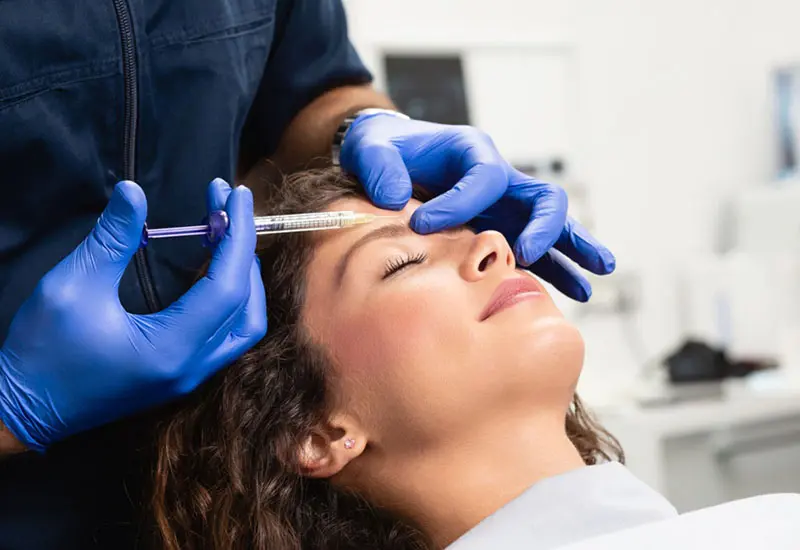
Polynucleotide treatment is minimally invasive and completely non-surgical. After carefully cleansing the skin and, if desired, applying an anesthetic cream, I inject the active ingredient, prepared in gel form, specifically into the middle layer of the skin using a very fine needle, where the polynucleotides unfold their regenerative effect. Thanks to the fine needles and the optional anesthetic cream, the vast majority of patients find the treatment barely or only slightly unpleasant.
Depending on the number of regions treated, the actual treatment usually takes about 30 minutes. For an optimal result, two to three sessions two to four weeks apart are usually recommended, as the skin's regenerative processes build up over several sessions. Because the treatment is so gentle and involves practically no downtime, it can easily be integrated into everyday life, and you can go out in public immediately afterwards, although slight redness or small wheals at the injection sites are possible, which quickly subside.
After the treatment: effect and durability
A result that builds up gradually and naturally
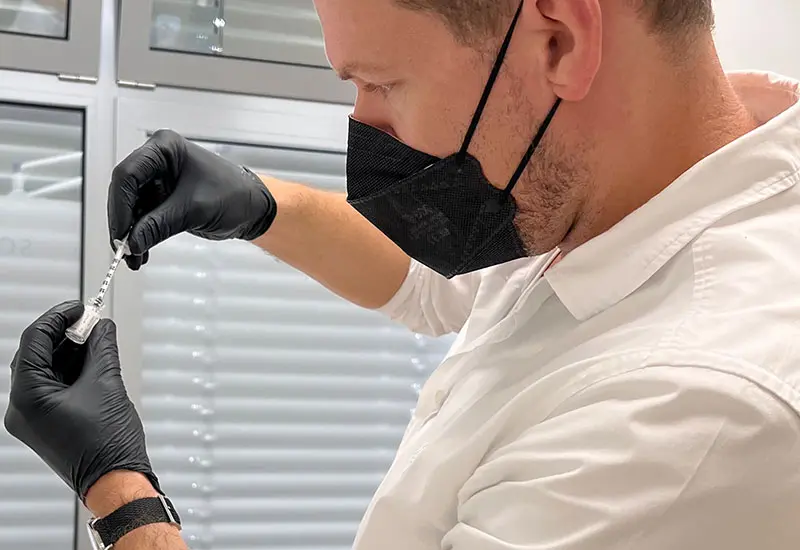
Because polynucleotide treatment does not involve immediate filling but stimulates the body's own regeneration processes, the result builds up gradually and in a very natural way. Improved skin hydration, a fresher complexion and a visible glow often appear in the first few weeks after the start of treatment, while the more pronounced structural effects, such as more firmness and a refined skin structure, typically develop over two to three sessions.
As polynucleotides act as biostimulators and do not fill with foreign material, the durability of the result cannot be predicted to the day, but it is usually in the range of several months. To maintain the beautiful result in the long term, a combination of an initial treatment series and matching top-ups has proven effective. For the time immediately after the treatment, I recommend not massaging the treated area for the first 24 hours, avoiding sports for a few days and avoiding intense sun, solariums and saunas for about one to two weeks, so that the skin can regenerate as well as possible.
Possible risks and side effects
Polynucleotide treatment is considered very safe and well tolerated, partly due to the high purity of the active ingredients used and their structural similarity to human DNA. As polynucleotides are also in an aqueous solution and spread finely in the skin, they behave differently from classic fillers. Nevertheless, it is a medical procedure that can be accompanied by certain, usually harmless, side effects.
- Redness and swelling: Slight redness or swelling at the injection sites is normal and usually subsides within a few hours to days.
- Small wheals or bruises: Small wheals or minimal bruises may temporarily appear at the injection sites.
- Feeling of pressure or sensitivity: The treated area may be somewhat sensitive to touch for a short time.
Stronger reactions or allergic intolerances are very rare, which is precisely why careful medical information beforehand and treatment by an experienced specialist are so important. I will discuss all points relevant to you in detail before the treatment.
Polynucleotides or hyaluronic acid?
Two active ingredients with different tasks
The question of whether polynucleotides or hyaluronic acid are the better choice cannot be answered in general terms, as the two active ingredients serve different purposes, and it is less about better or worse than about the appropriate goal. Hyaluronic acid is used above all to create volume, emphasize contours and fill wrinkles immediately, which is why its effect is visible right away. It is therefore particularly suitable for anyone who wants an immediately recognizable result.
Polynucleotides, on the other hand, work primarily in a regenerative way, by stimulating the body's own repair processes, promoting the formation of collagen and elastin and thus improving skin quality in the long term. The result is particularly natural; the skin looks fresher, denser and more even. In many cases, the two approaches complement each other excellently, because while hyaluronic acid provides immediate volume and structure, polynucleotides lastingly improve the condition and regenerative capacity of the skin itself. Whether one active ingredient, the other or a combination makes sense in your case is something we clarify together in the consultation.
Polynucleotides, PDRN and skin boosters: the differences
Terms that are often confused
In connection with regenerative skin rejuvenation, various terms often come up that are frequently mixed up, even though they do not mean the same thing. For better orientation, a brief classification:
- Polynucleotides (PN): The umbrella term for DNA-based molecular chains used as biostimulators and belonging to regenerative aesthetics.
- PDRN (polydeoxyribonucleotides): A special, particularly well-researched form of polynucleotide, usually also derived from salmon DNA and very common in aesthetic medicine.
- Skin booster: A term that describes the effect, namely the improvement of skin hydration, glow and fine structure, but not necessarily the specific ingredient. A skin booster can be based on hyaluronic acid, polynucleotides or a combination.
For you as a patient, it is above all important to know that polynucleotides are a regenerative active ingredient that does not fill the skin but renews it from within.
Cost of polynucleotide treatment in Stuttgart
Transparent prices for your individual treatment
The cost of polynucleotide treatment depends on the treated area and the individual treatment plan, in particular the number of recommended sessions. In my practice in Stuttgart, treatment with polynucleotides starts at around €450 per session for two milliliters. As two to three sessions are usually advisable for an optimal result, the total effort depends on your personal treatment plan, which we determine together in the consultation.
I deliberately work in a results-oriented and conceptual way rather than in rigid units, because the focus is on the best possible and most natural result for you. After the consultation, you will receive a transparent overview of the expected costs from me, so that you can approach your treatment calmly and with full planning certainty. As this is a purely aesthetic treatment, the costs are not covered by health insurance.
Directions to my practice in Stuttgart
Everything you need to know for your visit
Dr. med. Christoph Zimmermann
Private practice for plastic and aesthetic surgery
Regerstraße 1, 70195 Stuttgart, Germany
Phone: +49 711 46966991 (no appointments by phone)
E-mail: kontakt@plastischechirurgie-zimmermann.de
My barrier-free practice is located on the 2nd floor of the Orthopädische Klinik Stuttgart-Botnang. For your first consultation, please register at the central reception on the ground floor on weekdays; the main entrance is just around the corner. You can also come directly to the 2nd floor and take a seat in the seating area towards the terrace, where we will pick you up.
On weekdays, you can park free of charge in our in-house underground car park; there are also plenty of free parking spaces in the surrounding streets.
You are currently viewing placeholder content from Google Maps. To access the actual content, click the button below. Please note that data will be passed on to third parties. More information
Other treatments
Frequently asked questions about polynucleotide treatment
What are polynucleotides and how do they work in the skin?
Polynucleotides are long, highly purified chains of nucleotides, the natural building blocks of DNA and RNA. In aesthetic medicine, they are injected into the skin as biostimulators, where they can support the body's own repair processes and promote the activity of fibroblasts. These cells are involved, among other things, in the formation of collagen and elastin.
The aim is not to change shape or volume but to gradually improve the moisture content, structure, elasticity and resilience of the skin. The result therefore develops more slowly than after classic wrinkle injections and usually looks very natural.
Why are polynucleotides often derived from salmon DNA?
Salmon and trout DNA is rich in long DNA chains that are suitable for biotechnological processing into polynucleotide preparations. For medical use, the starting material is purified in several steps and processed into a defined, injectable gel.
In a high-quality preparation, undesirable components and animal proteins are removed during purification. It is therefore not untreated fish material but highly purified DNA fractions. Nevertheless, in the case of a known fish allergy, treatment is not recommended for safety reasons.
What is the difference between polynucleotides, PDRN and skin boosters?
The term polynucleotides, PN for short, serves as an umbrella term for longer DNA-based molecular chains used as biostimulators in regenerative aesthetics. PDRN stands for polydeoxyribonucleotides and refers to a special form or preparation of such DNA fragments. In everyday practice, the two terms are often used side by side, although they are not scientifically identical.
Skin booster, on the other hand, primarily describes the treatment goal, namely more moisture, freshness and a finer skin structure. A skin booster can contain hyaluronic acid, polynucleotides or a combination of different active ingredients. The specific ingredient should therefore be clarified before every treatment.
Who is polynucleotide treatment suitable for and from what age does it make sense?
Polynucleotide treatment is an option for adult women and men who want to improve their skin quality without visibly changing their facial features. There is no fixed ideal age, as the decisive factors are the condition of the skin, the treatment goal and possible contraindications.
With younger skin, the focus is often on hydration, radiance and an irregular skin texture. With more mature skin, it is usually about fine lines, declining elasticity and an incipient loss of density. Whether the treatment makes sense in an individual case can only be reliably assessed after a medical examination.
Which skin areas can be treated with polynucleotides?
Polynucleotides can be used above all on the face, the sensitive eye area, the neck and décolleté and the hands. They are particularly suitable for regions where the skin looks thin, dry, finely crinkled or visibly tired.
Not every preparation and not every concentration of active ingredient is equally suitable for every area. Product choice, quantity, injection depth and treatment technique are therefore adapted to the respective region and individual tissue condition.
Which skin problems can be improved with polynucleotides?
The treatment can be useful for sallow or dehydrated skin, fine lines, an uneven skin structure and an incipient loss of firmness and elasticity. The aim is more even, more resilient and better hydrated skin that looks fresher and more rested overall.
Deep wrinkles, pronounced excess skin and significant volume deficits, on the other hand, cannot be corrected with polynucleotides alone. In such cases, other or complementary procedures may be more suitable, which is assessed in the consultation based on the actual findings.
Can polynucleotides improve acne scars and enlarged pores?
With superficial acne scars, an irregular skin texture and pores that appear enlarged, polynucleotides can support regenerative treatment. Through the gradual improvement of hydration, elasticity and skin structure, the complexion can appear finer and more even.
However, deep acne scars are not simply filled in or completely removed in this way. Depending on the type of scar, a combination with medical microneedling or another targeted scar procedure may make more sense. In the case of active, inflammatory acne, the skin condition should first be assessed and treated by a doctor.
Are polynucleotides suitable for the eye area and dark circles?
The thin skin around the eyes is one of the most frequently treated regions, because polynucleotides can improve fine crinkly lines, dryness and declining skin quality there without specifically building volume. The eye area can thus look smoother, fresher and less tired.
However, dark circles have different causes. If they are mainly due to pigment, clearly visible blood vessels, a pronounced tear trough or under-eye bags, polynucleotide treatment alone is often not sufficient. Before the treatment, it should therefore be examined precisely which finding is actually responsible for the dark or tired impression.
Are polynucleotides a filler and how do they differ from hyaluronic acid?
Polynucleotides are not classic volume fillers. Hyaluronic acid is used to shape contours, compensate for volume loss or lift certain wrinkles immediately, which is why the result is usually visible right away. Polynucleotides, by contrast, primarily target the regeneration and quality of the skin.
Which method is better suited therefore depends on the desired result. If volume is lacking, hyaluronic acid may be more suitable; for fine, dry or poorly regenerating skin, polynucleotide treatment is more likely. In selected cases, the two procedures complement each other, provided that product choice and timing are planned by a doctor.
How does polynucleotide treatment in Stuttgart work and how long does it take?
Before the treatment, skin condition, wishes, pre-existing conditions and possible contraindications are carefully discussed. The treatment area is then cleansed and disinfected. On request, an anesthetic cream can be applied beforehand.
The active ingredient, which is in gel form, is injected specifically into the middle layer of the skin using a very fine needle. Depending on the number and size of the treated regions, the actual appointment usually takes about 30 minutes. The treatment is carried out on an outpatient basis in the practice; a stay in a clinic is not necessary.
Is polynucleotide treatment painful?
Most patients find the treatment easy to tolerate. What is usually felt are brief pricks, a slight feeling of pressure or a temporary burning sensation, although sensitive regions such as the eye area may react somewhat more sensitively.
Very fine needles and an anesthetic cream applied on request can usually reduce the unpleasant sensation significantly. Personal pain perception nevertheless varies and is taken into account when planning the treatment.
How many polynucleotide treatments are needed?
For a visible and stable improvement in skin quality, two to three sessions two to four weeks apart are usually advisable. The effect arises not only from the injected preparation but above all from the regeneration processes subsequently stimulated, which need time between appointments.
The exact number depends on the initial findings, the skin region, the preparation used and the desired result. After completion of the treatment series, it is assessed whether and when a top-up makes sense.
When are the first results visible after polynucleotide treatment?
Improved hydration and a fresher complexion can appear in the first few weeks after starting treatment. Changes in skin structure, firmness and elasticity develop more slowly and often only become clearer over the course of the complete treatment series.
As the body's own remodeling processes are stimulated, there is no fixed day on which the final result suddenly becomes visible. The skin improves gradually, which makes the effect appear particularly natural.
How long does the result of polynucleotide treatment last?
The result usually lasts several months, but it cannot be pinned down to a fixed period for every person. Skin age, initial condition, treated region, lifestyle and the number of sessions performed influence how long the improvement remains visible.
Polynucleotides are broken down by the body, while the stimulated regeneration processes can continue to have an effect for a while. For long-term maintenance, an initial treatment series with later, individually planned top-ups has proven effective.
How well is the effect of polynucleotides scientifically proven?
Clinical studies and scientific reviews describe improvements in skin hydration, elasticity, surface structure and fine lines, including in the eye area. The tolerability profile known to date is favorable, provided suitable preparations are injected professionally.
Nevertheless, the body of studies is less extensive and less consistent than for some procedures that have been established for many years. Treatment protocols, preparations and measurement methods differ, which is why no effect can be guaranteed. Reputable advice should take these limitations into account and realistically assess the expected result.
Can you return to work and go out in public immediately after the treatment?
In most cases, there is no significant downtime, so everyday and professional activities are possible again immediately. However, small wheals, redness, slight swelling or bruises may be visible at the injection sites.
These side effects usually subside within a few hours to days. If you have an important professional or private appointment planned, you should allow a little extra time as a precaution, especially after treatment of the sensitive eye area.
What should be considered after polynucleotide treatment?
The treated area should not be rubbed or massaged in the first 24 hours. It is best to avoid make-up on the day of treatment until the fine injection sites have closed. Sports should be paused for a few days so that swelling and bruising are not unnecessarily intensified.
Intense sun, solariums and saunas should be avoided for about one to two weeks. Consistent sun protection supports the skin during regeneration. Depending on the treated area and individual reaction, further recommendations may be given in the personal aftercare instructions.
What risks and side effects can occur with polynucleotides?
Typical temporary reactions include redness, swelling, small wheals, minimal bruising and a slight feeling of pressure or increased sensitivity to touch. These usually resolve on their own within a few hours to days.
Rarely, stronger inflammatory reactions, infections or allergic intolerances are possible. Sterile working methods, a high-quality preparation and treatment by a specialist reduce avoidable risks. In the case of increasing pain, pronounced redness, unusual skin discoloration or persistent swelling, the treating practice should be contacted promptly.
Who should not have polynucleotide treatment?
Treatment is not recommended in the case of a known fish allergy, during pregnancy and breastfeeding, or in the case of acute infections or inflammatory skin conditions in the intended treatment area. Poorly controlled conditions can also temporarily rule out treatment.
Anyone taking blood-thinning medication should mention this in the consultation, as the risk of bruising may increase. Medications must never be stopped on your own. Pre-existing conditions, allergies and all regularly taken preparations are checked by the doctor before the treatment.
Can polynucleotides be combined with other aesthetic treatments?
In principle, polynucleotides can be combined with hyaluronic acid, botulinum toxin, medical microneedling, PRP or other regenerative procedures, because these treatments serve different purposes. While polynucleotides mainly support skin quality, other methods can more specifically treat, for example, volume, expression lines, scars or more pronounced tissue laxity.
Not every combination should take place on the same day. The order and timing depend on the skin condition, treatment region and procedure used and are therefore determined in an individual overall concept.
How much does polynucleotide treatment cost in Stuttgart and does health insurance cover the costs?
In Dr. Zimmermann's practice, polynucleotide treatment starts at around €450 per session for two milliliters. As two to three sessions are usually recommended for an optimal result, the total price depends on the personal treatment plan and the intended areas.
The treatment serves aesthetic skin improvement and is therefore generally not covered by statutory or private health insurance. After the personal consultation, patients receive a transparent cost overview before any treatment is planned.
Where does the polynucleotide treatment take place in Stuttgart?
The treatment is carried out on an outpatient basis in the private practice of Dr. med. Christoph Zimmermann at Regerstraße 1, 70195 Stuttgart. The barrier-free practice rooms are located on the second floor of the Orthopädische Klinik Stuttgart-Botnang.
An inpatient stay is not required for this minimally invasive treatment. On weekdays, the building's own underground car park and other free parking options in the surrounding area are available to patients.
Do you have any questions that are not listed here, or would you like more information about polynucleotide treatment in Stuttgart? I am happy to take time for a detailed and trusting consultation. Call +49 711 46 96 69 91 or book an appointment directly online: Go to appointment booking.