

Thigh lift in Sindelfingen
Your path to firm skin and beautiful legs
The thigh lift is a precisely planned plastic and aesthetic procedure that aims to remove sagging skin on the inner thighs and clearly define the leg contour again. Skin laxity is particularly common in this region, as the tissue here is naturally very fine and sensitive. The causes are usually significant changes in weight, age-related loss of elasticity or a congenital weakness of the connective tissue, which can cause the skin to lose its firmness and develop typical signs such as excess skin or stretch marks (striae).
In addition to these visual changes, functional restrictions often arise: friction between the inner thighs can lead to painful skin irritation or eczema, wearing certain clothes becomes uncomfortable and sporting activities are often only possible to a limited extent. Many patients also report that these physical changes have a negative effect on their self-image and well-being.
A thigh lift can not only significantly improve the appearance of the legs but also lastingly increase quality of life. In my practice in Sindelfingen, I combine modern lifting techniques with tissue-friendly liposuction where necessary. In this way, excess skin and bothersome fat deposits can be precisely removed in order to restore the natural contour of the legs and create a harmonious, aesthetic overall picture.
Key facts about arm lifts
| Duration of surgery: | approx. 2–3 hours |
|---|---|
| Special features: | Gentle hybrid technique with liposuction |
| Type of anesthesia: | General anesthesia |
| Hospital stay: | inpatient |
| Aftercare: | adhesive strips for approx. 2 weeks, physical rest for 4–6 weeks, compression pants for 6 weeks |
| Sports activities: | after approx. 6 weeks |
| Follow-up treatment: | regular check-ups up to 1 year after surgery |
| Back to social life: | 7–14 days depending on the course of healing |
| Back to work: | approx. 14 days for light office work, longer otherwise |
| Treatment costs: | from €7,500 |
* The costs of anesthesia and accommodation in the private clinic are invoiced separately and transparently.

4,98715 reviews
What our patients say
Based on 715+ reviews
When a thigh lift makes sense
The procedure is particularly suitable for patients who suffer from an uneven leg profile after significant weight reduction or as a result of age-related or congenital skin laxity, or who are bothered by sagging tissue. The best conditions exist when there is above all significant excess skin. In such cases, the best lifting results can be achieved and the risk of complications is usually lower.
The result is a firmer, smoother skin structure and a more harmonious line of the legs – especially in the sensitive area of the inner thighs. This not only contributes to an aesthetic improvement but often also increases personal well-being and freedom of movement.
Methods and techniques of the thigh lift
Modern surgical procedures for precise results
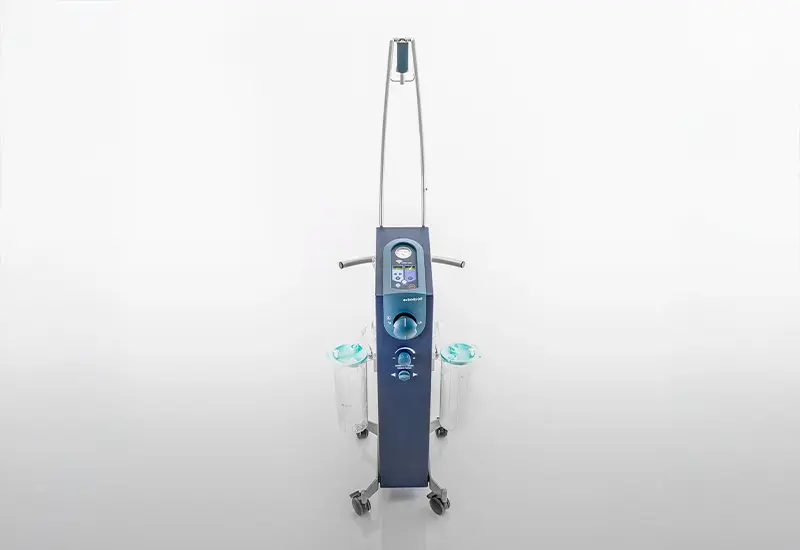
In my practice, only modern and particularly gentle surgical techniques are used for thigh lifts, tailored to the individual anatomical conditions of my patients. I often work with the so-called hybrid technique, in which liposuction using the water-jet technique (Bodyjet) is performed first. This technique allows very tissue-friendly preparation of the surgical field, protects lymph vessels, nerves and blood vessels and ensures a more even and natural-looking final result.
In the next step, I precisely remove the excess skin along the inner thigh and shape the contour so that a harmonious overall picture is created. When planning the incision, I attach great importance to positioning the scars as inconspicuously as possible along the natural course of the skin folds. The aim is to strike a balance between maximum tightening and an aesthetically sophisticated, natural result.
This combination of careful planning, state-of-the-art technology and precise surgical execution minimizes the strain on the tissue while achieving a particularly harmonious, long-lasting result.
Detailed consultation and surgical planning
A detailed discussion as the basis for a harmonious result
Every thigh lift begins with a comprehensive, personal consultation in which I take enough time to analyze your individual initial situation precisely. I examine the skin condition, the state of the connective tissue and the extent of any excess skin in order to develop a treatment concept tailored to you. Your personal wishes, goals and any concerns, which we discuss openly and transparently, are just as important.
I explain the planned steps of the procedure, the changes to be expected and possible risks so that you can make a well-founded and confident decision. It often helps to show with concrete examples how the contours will change after the lift. This avoids misunderstandings and creates realistic expectations.
On the day of the operation, the exact markings are made while you are standing. I define the so-called lifting pattern, i.e. the planned skin resection and the subsequent course of the scar. Depending on the individual extent, the scar can run strictly along the inner side or, with more pronounced excess skin, be continued into the groin or towards the knee. The aim is always to place the scars as inconspicuously as possible and to achieve a natural-looking, aesthetically pleasing result.


The thigh lift procedure and aftercare
Before the procedure, the areas to be treated are precisely marked and the course of the scar is carefully planned. The operation is usually performed under general anesthesia. First, if necessary, excess fat is removed using the tissue-friendly water-jet technique (Bodyjet). This is followed by the actual lift: excess skin is removed, the tissue reshaped and the contour precisely modeled. Low-tension wound closure reduces the risk of noticeable scarring. Immediately afterwards, a compression bandage is applied, which reduces swelling and optimally supports the healing process.
After the operation, a particularly important phase begins: aftercare. It has a decisive influence on the final result and should be taken just as seriously as the procedure itself. Consistently wearing compression garments is crucial – it helps to reduce swelling, stabilize detached tissue layers again and promote lymph flow. In addition, regular follow-up appointments in my practice take place to monitor the healing process closely and to be able to react early if necessary.
My patients receive detailed instructions on scar care and practical recommendations on how they can actively support the healing process, for example through adapted physical activity, a balanced diet and a generally gentle lifestyle in the first weeks after the procedure. In this way, the surgical result can not only be secured but also optimized in the long term.

How much does a thigh lift cost?
The cost of a thigh lift depends on the individual findings, the extent of the excess skin and the chosen technique. The price starts at around €6,500 and can vary, especially for more complex procedures with additional liposuction. As part of the consultation, I draw up a transparent, individual cost plan for you, so that you have clarity about the financial outlay from the outset.
Risks and possible side effects
In experienced hands, the thigh lift is a safe procedure with high patient satisfaction. Nevertheless, as with any operation, a certain residual risk remains. Typical, mostly temporary reactions are swelling, bruising or a feeling of tightness in the surgical area. These usually subside after a short time. It is important to follow the medical aftercare recommendations precisely in order to support the result as well as possible and avoid complications.
Less frequently, wound healing problems, infections or visible scarring may occur. However, careful surgical planning, modern suturing techniques and consistent compression therapy can significantly minimize these risks. A thigh lift should therefore only be performed by experienced specialists in order to achieve an aesthetically and functionally optimal result.
Frequently asked questions (FAQ) about thigh lifts in Sindelfingen
Who is a thigh lift suitable for?
The operation is suitable for patients with pronounced excess skin and sagging tissue on the inner thighs – often after major weight loss, with age-related loss of elasticity or a genetic weakness of the connective tissue. It is crucial that body weight is stable and that there are no acute skin conditions in the surgical area. The aim is a more harmonious contour, less friction in everyday life and a noticeable gain in well-being.
How is the procedure performed?
The thigh lift is usually performed under general anesthesia. After the incision has been precisely marked, depending on the findings, water-jet-assisted liposuction (WAL, Bodyjet) is first performed to gently loosen and suction off residual fat deposits. This preparation reduces tissue trauma, protects lymph vessels, blood vessels and nerves and promotes a more even contour. The excess skin on the inner thigh is then removed, and the tissue is reshaped and closed with low tension. The scar is planned so that it lies as inconspicuously as possible along the natural line of the inner side. Finally, compression is applied, which must be worn consistently.
What are the risks of a thigh lift?
As with any surgical procedure, swelling, hematomas and temporary changes in sensation can occur. Rarely, wound healing problems, infections or more noticeable scarring occur. Specifically in the thigh area, care must be taken to protect the lymph vessels; the WAL technique supports this. The individual risk can be significantly reduced by good preparation (abstaining from nicotine, stable blood sugar control, stable weight), consistent compression for about 6 weeks, careful hygiene in the groin and genital area and physical rest.
How long does healing take and when can I go out in public again?
Light everyday activities are possible after a few days. A representative result appears once the main swelling has subsided – usually after 4 to 6 weeks, provided the compression is worn reliably. Sporting activities should generally be paused for about 6 weeks; the final scar matures over 9 to 12 months and should be supported during this time with care, massage and high sun protection.
How much does a thigh lift cost?
Costs start at around €6,500 and depend on the extent of excess skin, the necessary WAL liposuction and the duration of the operation. After the personal examination, you will receive an individual, transparent cost plan.
Can the treatment be combined with other procedures?
Yes. The lift is often combined with water-jet liposuction of adjacent areas to harmonize the transitions. Depending on the initial findings, combinations with other body-shaping procedures are also possible. Whether and which combination makes sense depends on your circumstances and the planned operating time and is decided individually in the consultation.